From Your Living Room
to the Leaderboard.
Green reading is a perishable skill. SlopeFeel turns your home into a precision calibration lab.
It's Not Magic. It's Proprioception.
Your brain is an incredible machine, but it needs data to function. In feeling-based green reading methods, your feet are the sensors. But like any sensor, they drift over time.
If you don't feel a true 2% slope for a week, your brain starts to guess. A 1% starts to feel like a 2%. A 3% feels like a cliff.
SlopeFeel provides a Constant Truth. By exposing your nervous system to exact, measured slopes daily, you build a "neural map" of break. When you step onto a real green, your brain doesn't guess—it recognizes.
Step-by-Step
The Setup
-
Surface
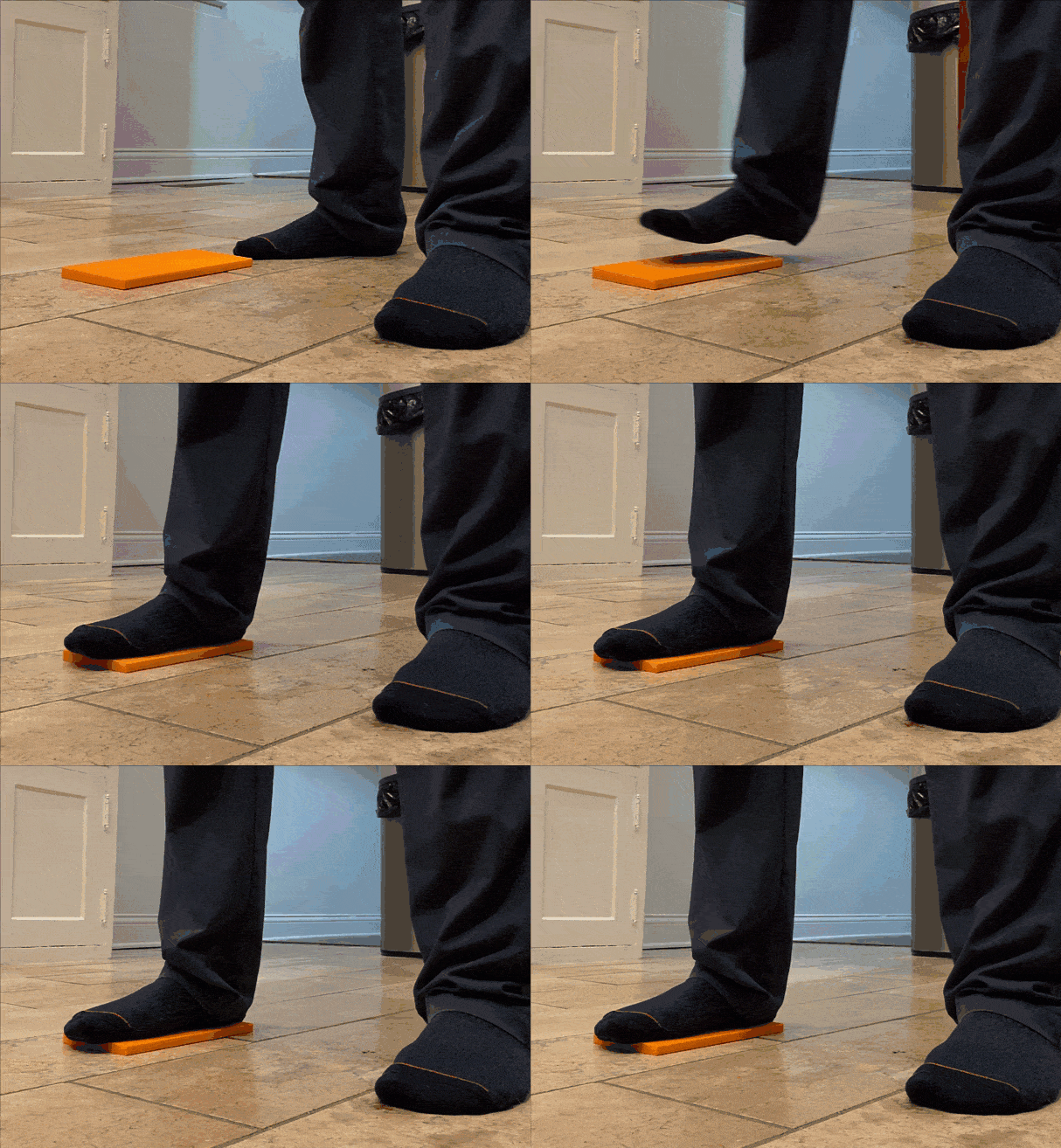
Place your SlopeFeel wedge on a hard, flat surface (tile, hardwood, or thin carpet).
-
Gear
Go shoeless. Thick soles dampen feedback. Practicing in socks maximizes the sensory input from your ankles and plantar nerves.
-
Stance
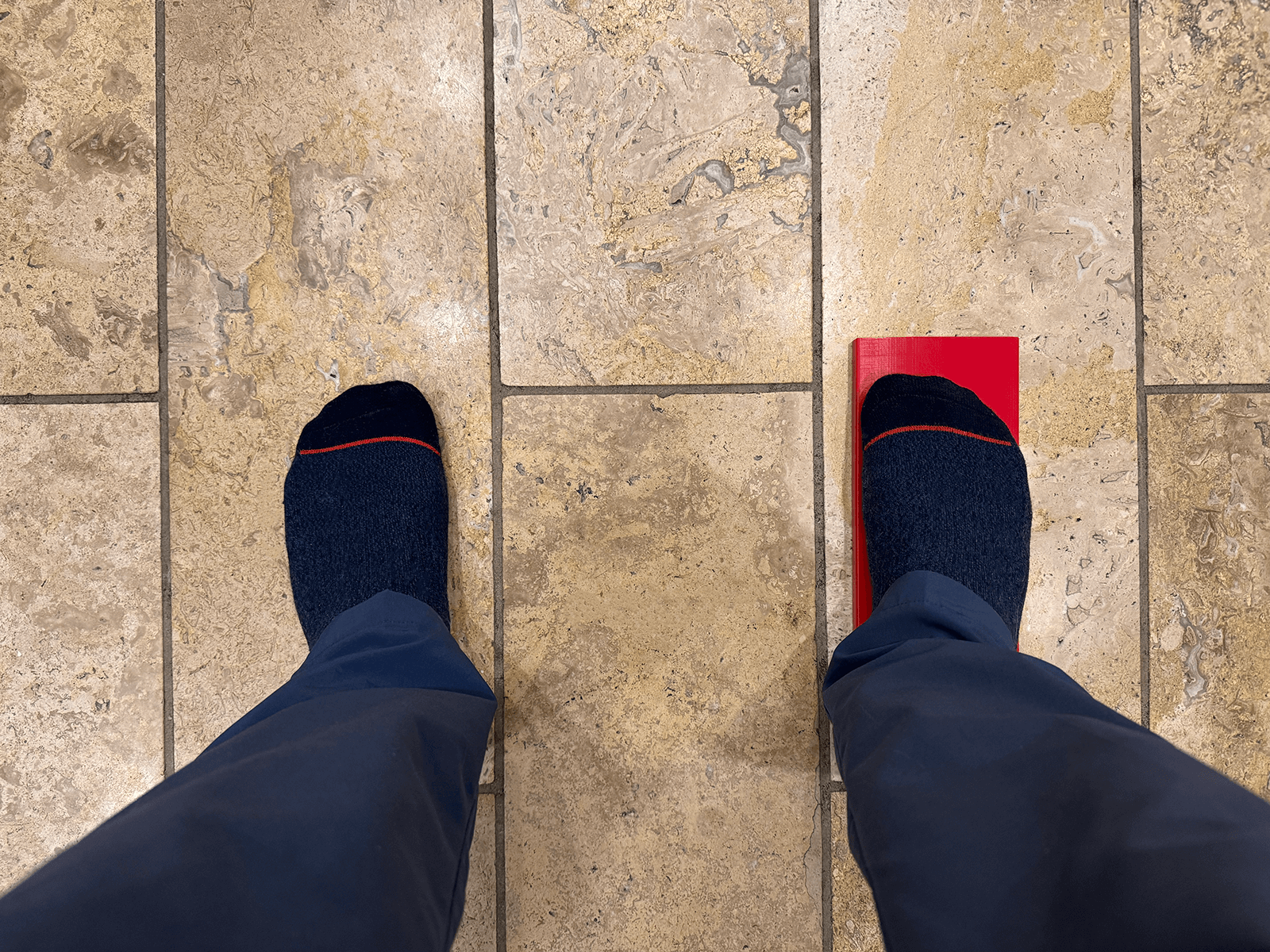
Straddle the wedge, with your feet about 16 inches apart. Place your mid-foot directly over the center line. Keep your legs straight but not locked.
The Download
-
Action
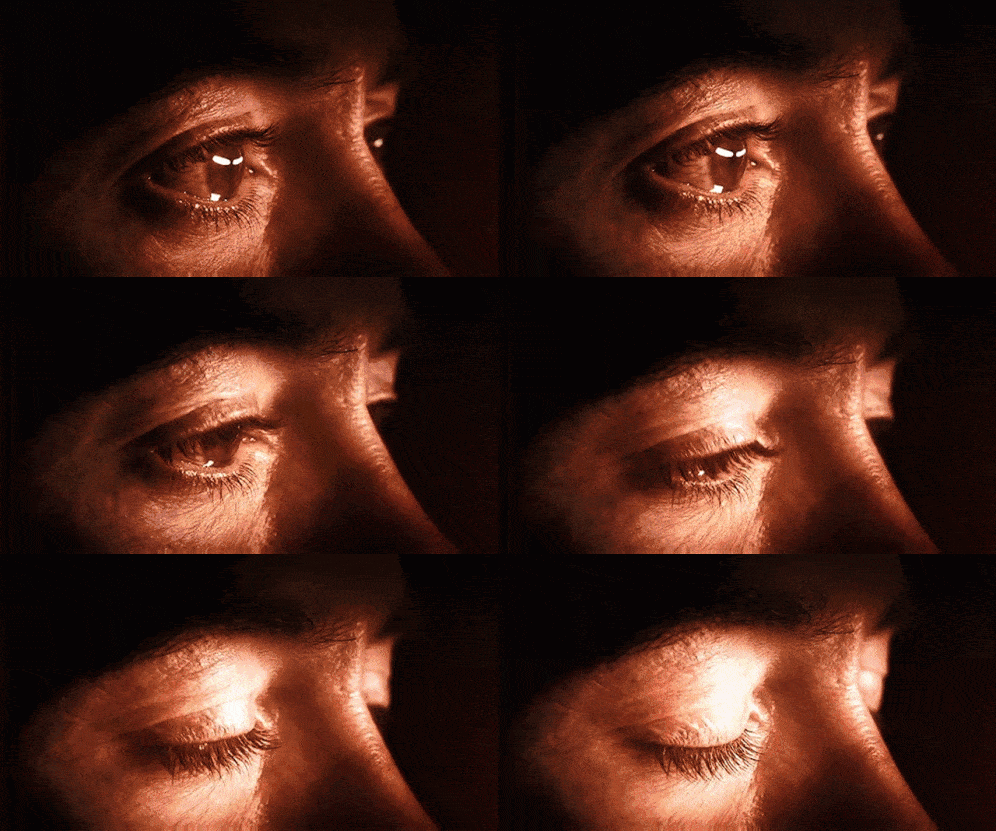
Close your eyes, shift your weight around a little to settle in.
-
Focus
Don't just stand there. Listen to your body. Feel the pressure shift to your lower foot. Feel the angle in your knees.
-
Label It
Say out loud (or internally), "This is what 2% feels like." Do this for 30 seconds. You are programming your baseline.
The Verification (The Blind Test)
-
Action
Shuffle the wedges (if you have the Pro Kit) or simply step off and spin around.
-
The Test
Step back onto a wedge without looking at the number.
-
The Read
Assess the slope. Is it a 1? A 1.5?
-
The Reveal
Check the debossed number, or color.
Got it right?
Your calibration is locked.
Got it wrong?
Your sensor is drifting. Repeat Step 2.
The "5-Minute Morning" Routine
You don't need to train for hours. Consistency beats intensity.
Stand on the 1% wedge. Internalize the subtle break.
Stand on the 3% wedge. Feel the significant severity.
Randomize. Step on, guess, verify.
Result: You arrive at the golf course already calibrated. No more wasting the first 4 holes "finding your feet."
Common Questions
Can I use these with shoes on?
Yes, but we recommend starting in socks. Shoes (especially modern, cushioned golf shoes) mask the subtle sensations needed for calibration. Once you master the feel in socks, training in shoes helps transfer that feel to the course.
Which slopes matter most?
If you only practice one thing, master the 2% slope. It is the most common significant break you will encounter on the average municipal or club green. The 1% is crucial for "straight-ish" putts, and 3%+ is for tiers and steep greens.
Is this a green reading method?
SlopeFeel is a training tool for developing slope perception, not a green reading method itself. We provide the hardware to practice the proprioceptive "feeling" part of slope-based green reading.
Does it matter which direction the wedge is facing?
Yes! The wedges are not flat—in addition to lifting off the ground, one side is higher than the other to create the slope. The higher part of the wedge should always be on the outside of whichever foot you're training.
Stop Guessing. Start Feeling.
Choose your calibration kit and start training today.